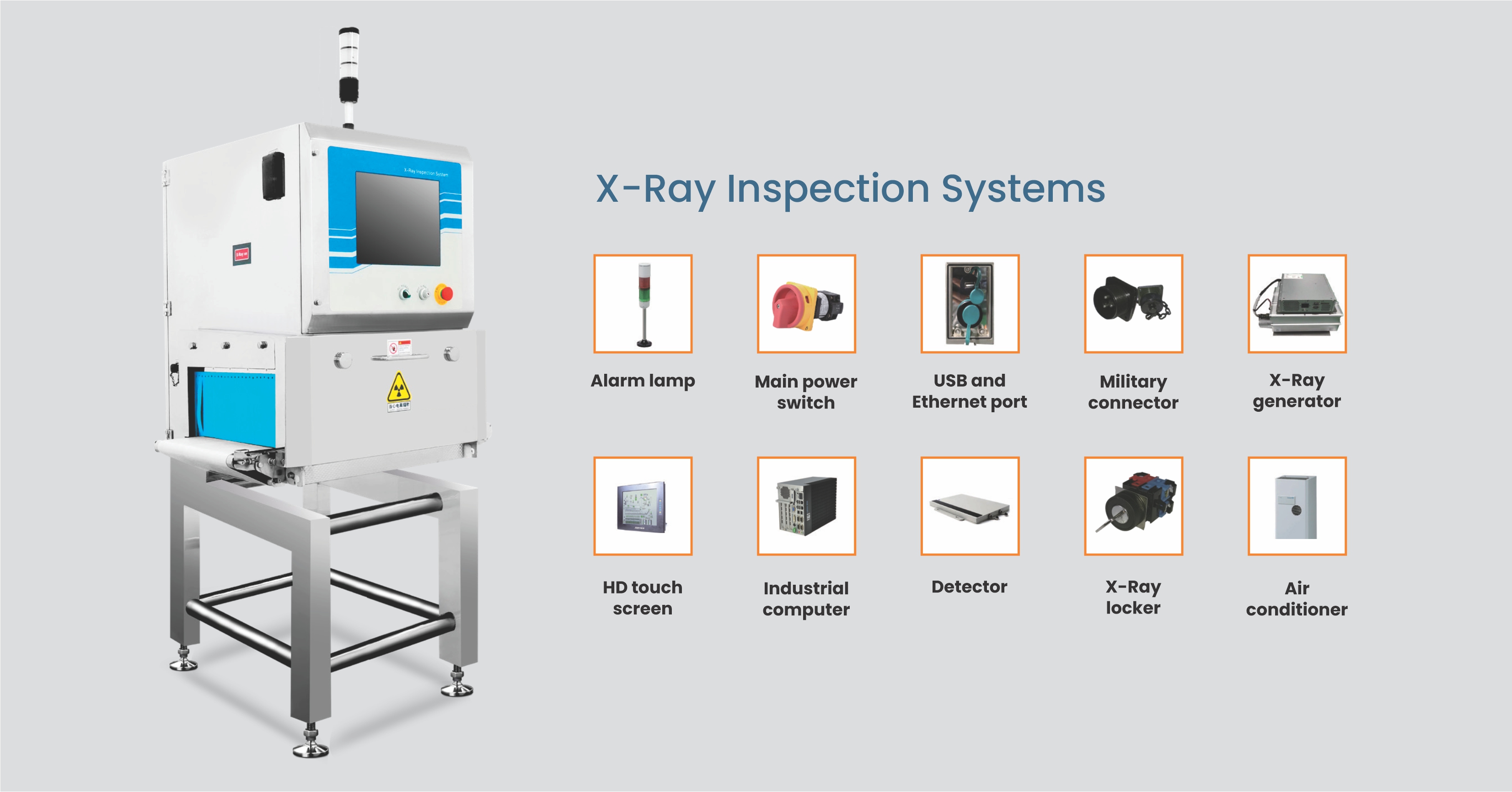
X-Ray Inspection System takes advantages of the penetrating power of X-Ray to detect contamination. It can achieve a full range of contaminants inspection including metallic, non-metallic contaminants (glass, ceramic, stone, bone, hard rubber, hard plastic, etc.). It can inspect metallic, non-metallic packaging and canned products, and the inspection effect will not be affected by temperature, humidity, salt content, etc.
X-Ray System – Working Principle
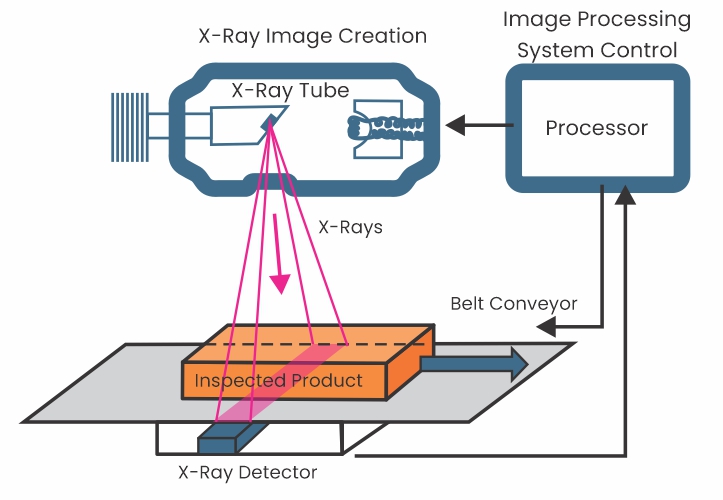
- An X-ray system consists of an X-ray source/ generator, a line-sensor detector and belt conveyor
- A beam of X-rays from the X-ray tube is radiated at the belt conveyor and is detected by the detector under the belt conveyor.
- As products pass along the belt above the detector, they block some of the X-rays passing through them resulting in grayscale image
- This image is then analysed for any abnormalities / contaminants/ missing component.
Innovative X-ray Technology: X-Ray Generator
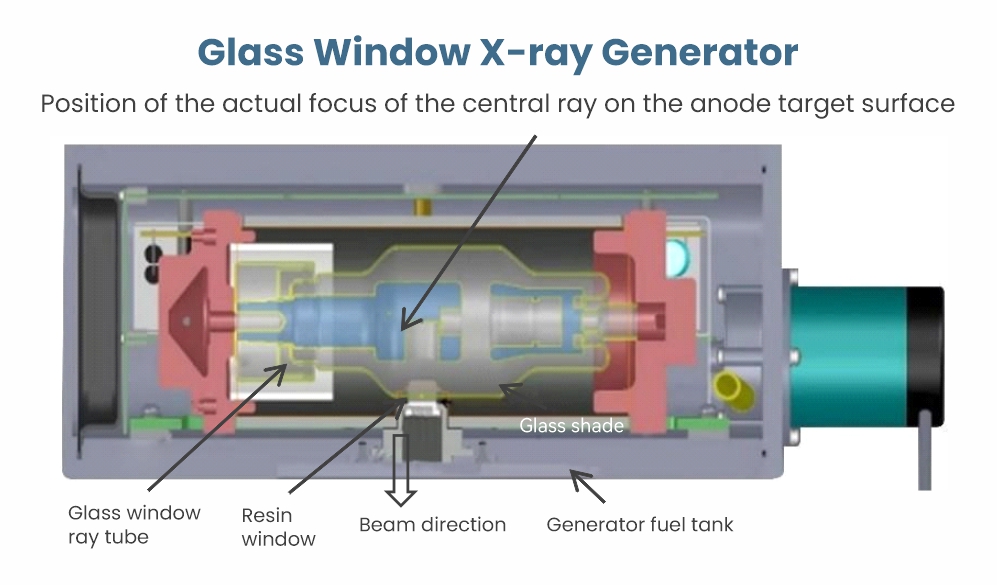
Light beam passes through three layers: 1.5-2mm glass wall, 2-10mm insulating oil, and 2mm resin window.
During this process, there is loss of X-ray energy, especially low energy.
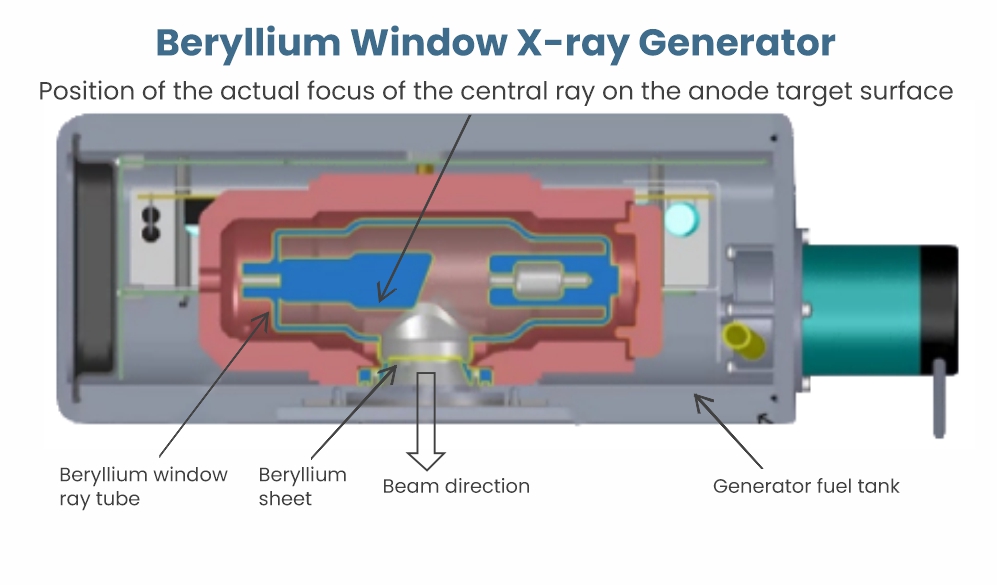
Beryllium generator better preserves the original X-ray energy, especially low-energy, thus higher-quality X-ray imaging can be obtained under the same X-ray dose conditions.
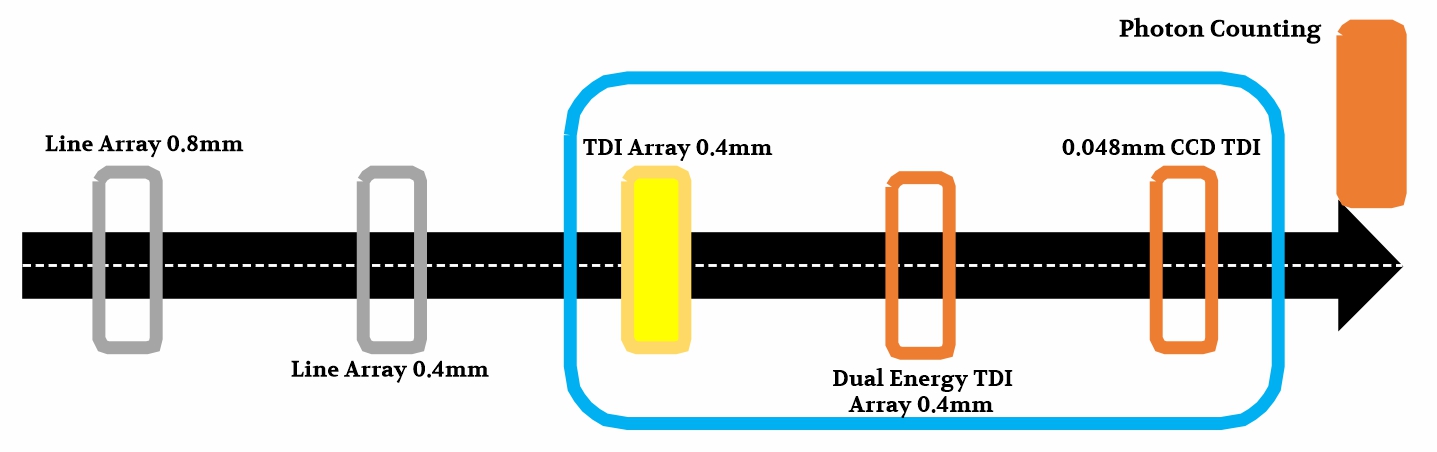
Innovative X-ray Technology: TDI 0.4mm Detector
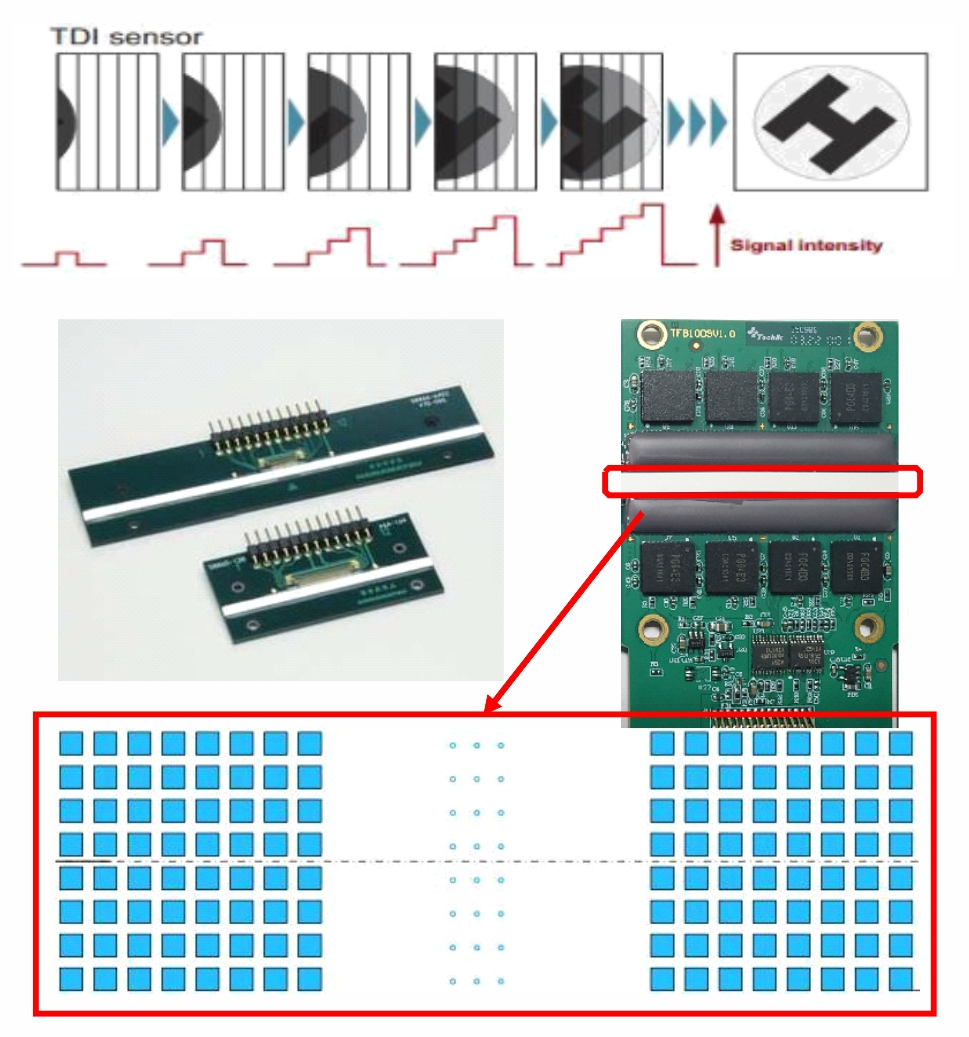
TDI refers to time-delayed integration technology, which uses 8 rows of surface array detectors to make multiple exposures and integrate and optimise them in order to obtain accurate image detail of the subject.
8-row TDI-0.4mm detector can achieve 8 times the exposure compared to a normal 0.4mm line array detector.
Advantages of 8-Row TDI
- Under the same power, exposure is better and image quality is better.
- Under the same exposure, only 1/8 of the radiation source power is needed, which can lead to a longer generator service life.